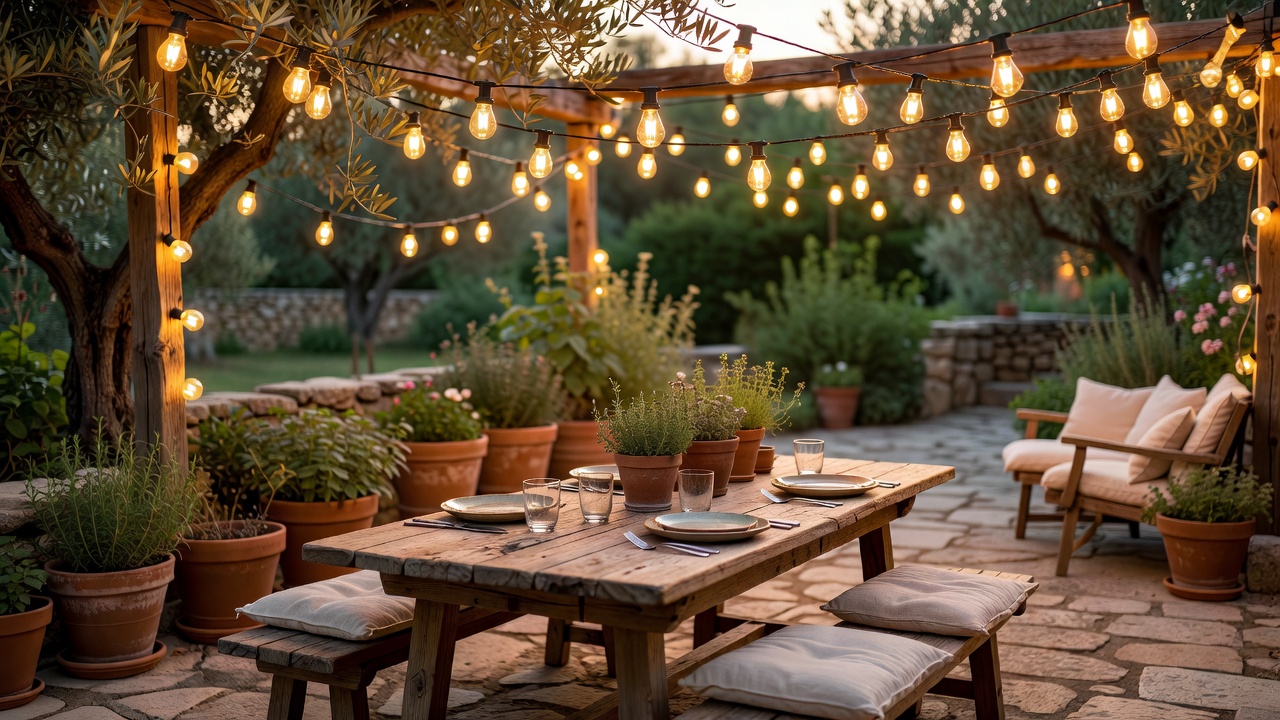
The Magic of Overhead Lighting
There is perhaps no quicker or more cost-effective way to transform the ambiance of a garden, patio, or pergola than by hanging string or festoon lights. Often associated with Italian piazzas, outdoor bistros, and summer festivals, overhead string lighting instantly softens a space, inviting guests to linger longer outdoors once the sun goes down.
While often used interchangeably, "fairy lights" generally refer to very small, delicate LED nodes integrated into a thin wire, whereas "festoon lights" describe larger, globe-style bulbs suspended from a heavy-duty cable. For larger architectural spaces and dedicated dining areas, festoon lighting is typically the preferred choice due to its scale and robust appearance.
Choosing the Right Bulbs
When selecting festoon lights, you will typically encounter two primary bulb socket sizes: medium base (E26/E27) and candelabra base (E12). Beyond the socket size, the shape and material of the bulb matter immensely.
- Glass vs. Shatterproof: Traditional glass bulbs offer a classic aesthetic and absolute clarity. However, for outdoor environments prone to high winds or for installations above hard patios, shatterproof polycarbonate or acrylic bulbs are highly recommended for safety.
- LED Filaments: Modern LED festoon lights often mimic the look of vintage Edison bulbs, featuring visible, warm-glowing "filaments." These offer the nostalgic look of incandescent lighting but consume vastly less electricity and remain cool to the touch.
- Color Temperature: To achieve a cozy, intimate atmosphere, look for bulbs with a warm white color temperature, typically between 2200K and 2700K. Anything higher (e.g., 4000K or daylight) can feel too harsh and clinical for a relaxing outdoor setting.
Understanding Weatherproofing and IP Ratings
Outdoor lighting must withstand rain, snow, UV rays, and fluctuating temperatures. When shopping for string lights, it is vital to check the Ingress Protection (IP) rating. An IP rating consists of two numbers: the first indicates protection against solids (like dust), and the second indicates protection against liquids.
For temporary, covered outdoor use, an IP44 rating may suffice. However, for permanent outdoor installations that will be exposed to direct rain year-round, you should seek products rated IP65 or higher. Commercial-grade festoon lights will often feature thick, rubberized cables and deeply recessed, weather-sealed sockets to prevent water ingress.
Installation Techniques
Proper installation ensures your string lights look professional and endure through rough weather without drooping or snapping.
For spans over a few meters, it is highly recommended to use a catenary wire (a thin, tensioned steel cable) as a support structure. Instead of relying on the electrical cable to bear the weight and tension of the span—which can damage the wiring over time—you suspend the steel cable between your anchor points using turnbuckles. The string lights are then zip-tied or clipped to this supporting wire. This method prevents excessive sagging and significantly increases the lifespan of the lighting kit.
Conclusion
String and festoon lights offer an unmatched return on investment when it comes to outdoor ambiance. By selecting shatterproof LED bulbs, prioritizing high IP ratings for weather resistance, and utilizing proper suspension techniques like catenary wire, you can create a durable, enchanting outdoor entertaining area that you will enjoy for years to come.