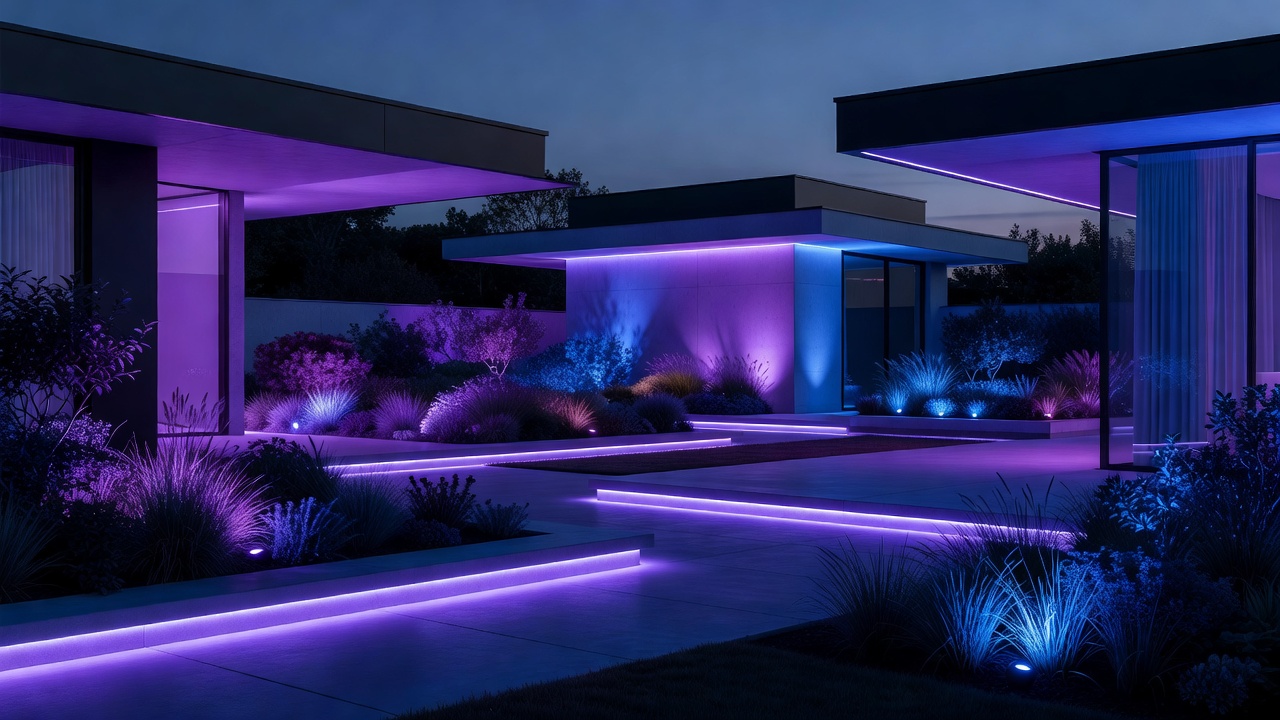
The Rise of Connected Outdoors
The smart home revolution has firmly crossed the threshold, bringing intelligent, app-controlled technology into our gardens and outdoor living spaces. Smart outdoor lighting allows you to control power, dimness, scheduling, and even exact color outputs directly from your smartphone, tablet, or via voice commands using virtual assistants.
Whether you want to set a warm, welcoming glow for everyday use, transition to vibrant party colors for a weekend barbecue, or have the lights automatically turn off when you leave the house, smart ecosystems provide unprecedented flexibility.
Communication Protocols: How They Connect
To function, smart lights must communicate with your network. Understanding the different protocols is essential for planning a reliable setup, especially since Wi-Fi signals often degrade once outside thick exterior walls.
- Wi-Fi: These lights connect directly to your home router. They are generally the easiest to set up since they require no additional hub. However, their range is limited by your router's reach, making them suitable only for spaces close to the house, like patios or decks.
- Bluetooth Mesh: Some systems use a mesh network where each light acts as a repeater, bouncing the Bluetooth signal from one bulb to the next. This extends the range significantly, allowing the system to reach the back of large gardens without needing Wi-Fi coverage there.
- Zigbee / Matter: Premium ecosystems often utilize a dedicated communication protocol like Zigbee, requiring a central hub plugged into your router. This is highly reliable, doesn't crowd your Wi-Fi bandwidth, and integrates seamlessly with broader smart home automation platforms. The newer Matter standard aims to unify these ecosystems further.
RGBW and Color Tuning
One of the standout features of smart lighting is "RGBW" technology. This stands for Red, Green, Blue, and White. Unlike older colored LEDs that mixed RGB to create a muddy white, RGBW fixtures include a dedicated white diode. This means you can enjoy a crisp, bright, natural white light for security and everyday aesthetic appeal, while still retaining the ability to shift into millions of colors when the occasion calls for it.
Color tuning also allows you to adjust the temperature of the white light. You can set it to a cool, energizing daylight (5000K) during the early evening, and automate it to slowly fade into a warm, relaxing amber (2200K) as the night progresses, helping support natural circadian rhythms.
Automation and Routines
The true power of smart lighting lies in automation. Using accompanying apps, you can easily set up routines:
- Sunset to Sunrise: Lights automatically trigger exactly at local sunset, adjusting daily throughout the year without you ever needing to reset a mechanical timer.
- Geofencing: Have your driveway and porch lights turn on automatically when your smartphone's GPS detects you are arriving home.
- Security Integration: Link your outdoor lights to smart security cameras. If the camera detects a person late at night, the smart lights can instantly flash red or turn to maximum brightness to deter the intruder.
Conclusion
Smart outdoor lighting transforms static garden fixtures into a dynamic, interactive system. While the initial investment is higher and setup requires basic technical know-how, the resulting convenience, security integrations, and sheer fun of infinite color customization make it a compelling upgrade for the modern home.