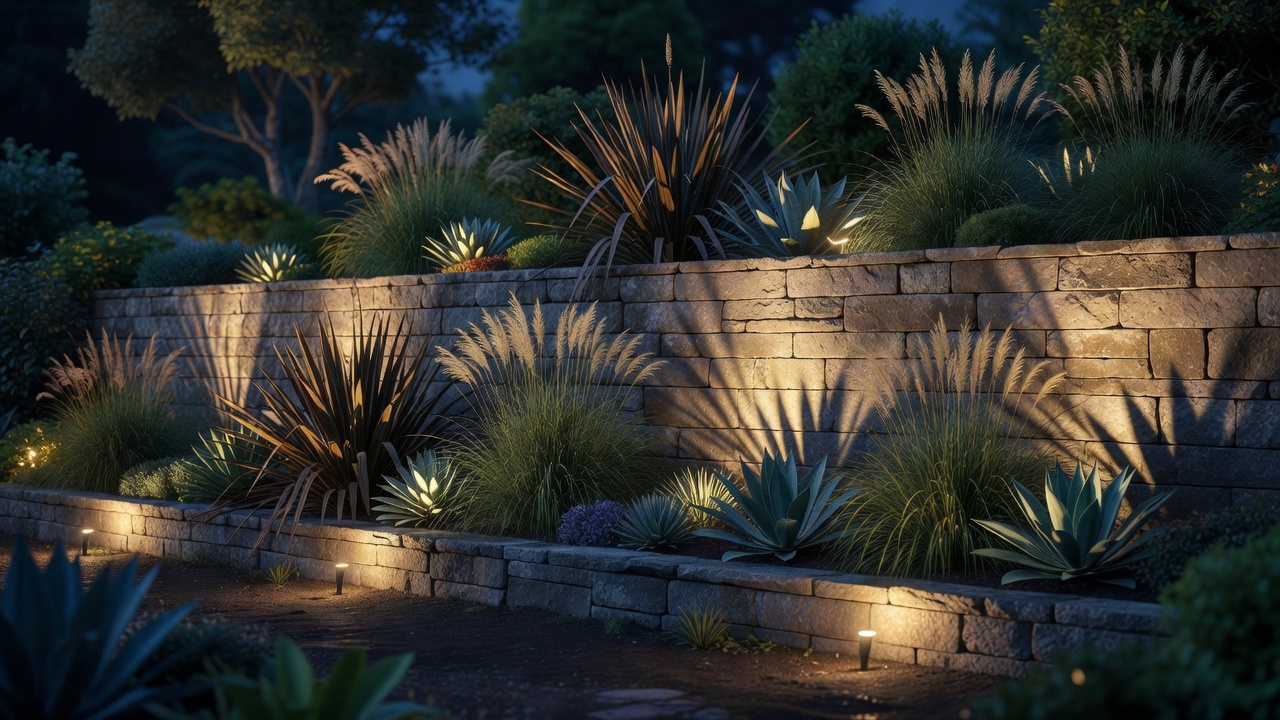
What is Low Voltage Lighting?
When landscape architects and professional garden designers plan an outdoor lighting scheme, they almost exclusively rely on low voltage systems. Operating typically at 12 volts (or sometimes 24 volts for commercial applications), these systems step down the standard household mains electricity using a dedicated transformer. The result is a highly reliable, consistent light output that is entirely independent of weather conditions, unlike solar alternatives.
Because the electrical current is stepped down to 12 volts, the wiring is completely safe to handle and does not carry the risk of fatal electric shock. This allows the cables to be buried just beneath the surface of mulch or soil, avoiding the deep, regulation-depth trenches required for 120V or 240V mains wiring.
Core Components of the System
A standard low voltage landscape lighting setup consists of three primary components:
- The Transformer: The heart of the system. It plugs into a standard outdoor electrical outlet and converts the high mains voltage down to 12V. Modern transformers often include built-in timers, photocells (to turn on at dusk), or smart connectivity for app control.
- The Cabling: Direct-burial landscape wire is used to carry the power from the transformer to the fixtures. It is graded by thickness (gauge). Thicker wire (lower gauge numbers like 10 or 12 AWG) can carry power over longer distances without significant voltage drop.
- The Fixtures: This includes spotlights, path lights, well lights, and deck lights. Today, most quality fixtures use LED bulbs (such as MR16 or G4 formats), which consume a fraction of the power of older halogen bulbs, allowing you to run more lights on a single transformer.
Understanding Voltage Drop
The most common challenge when installing a low voltage system is "voltage drop." As electricity travels down a long run of wire, the resistance of the wire causes the voltage to gradually decrease. If the voltage drops too low by the time it reaches the fixtures at the end of the line, those lights will appear noticeably dimmer than the lights closest to the transformer.
To combat voltage drop, installers use several strategies:
- Using Thicker Cable: Upgrading from 16-gauge to 12-gauge or 10-gauge wire reduces electrical resistance.
- Center-Tapping: Instead of running a single long wire from the transformer, the main wire is run to the center of the garden, branching off left and right to evenly distribute the power.
- LED Fixtures: Because LED bulbs draw very little wattage, voltage drop is far less of an issue today than it was during the halogen era. Many modern LED drivers can accept a wide range of voltages (e.g., 9V to 15V) while maintaining a consistent brightness.
Pros and Cons
The primary advantage of a low voltage system is ultimate reliability. You have complete control over when the lights turn on and off, and they will shine brightly whether it has been a sunny day or a week of rain. They also offer a much higher lumen output, making them suitable for highlighting large trees or illuminating vast architectural facades.
On the downside, the initial cost is significantly higher than solar lighting. You must purchase a transformer, spools of wire, and the fixtures themselves. Furthermore, installation requires careful planning, calculating total wattage, and physically running and hiding cables throughout the garden beds.
Conclusion
For homeowners looking for a permanent, high-quality outdoor lighting solution, low voltage systems are the gold standard. While the initial setup requires an investment of time and money, the resulting aesthetic impact, reliability, and property value enhancement are unparalleled.